
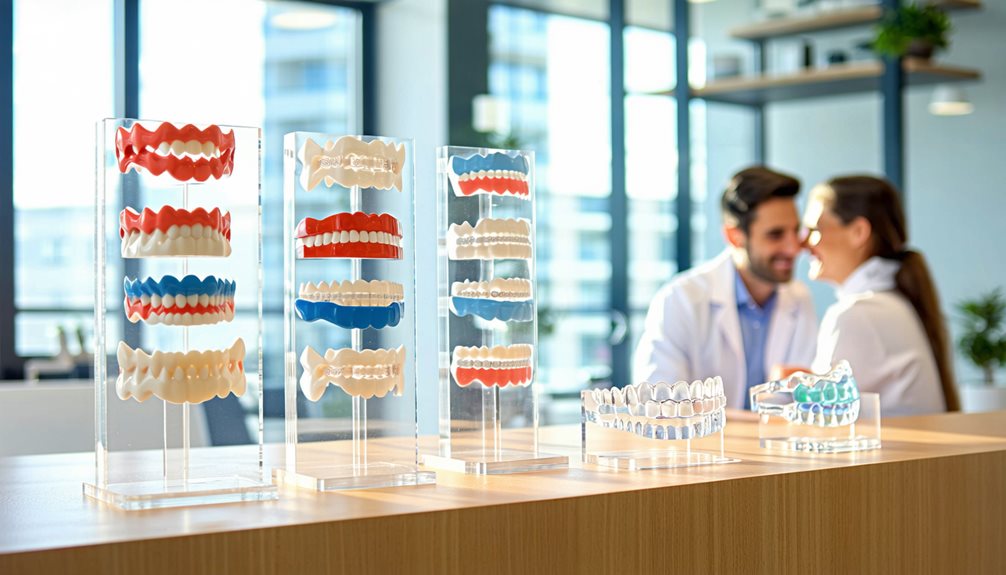
Budget-friendly braces and retainers solutions encompass a variety of effective orthodontic options. Traditional metal braces remain a cost-effective choice due to their durability and efficiency in correcting complex dental issues. Ceramic braces offer a discreet alternative without notably increasing costs. For those seeking nearly invisible solutions, Invisalign alternatives and at-home aligners, such as ClearCorrect and Candid, provide affordable choices enhanced by advanced 3D modeling. Flexible payment plans, insurance coordination, and seasonal discounts further ease the financial burden of treatment. Selecting the right orthodontist is essential to guarantee value and ideal results throughout the treatment journey. Discover more possibilities.
Traditional Metal Braces
Traditional metal braces, though often perceived as the most conspicuous orthodontic option, remain a cornerstone in corrective dental treatment due to their proven effectiveness and versatility. From a clinical perspective, metal braces provide unmatched precision in aligning teeth, thanks to their robust structure and ability to apply consistent pressure.
The benefits of metal braces extend to treating complex dental irregularities, including severe crowding and malocclusions, which alternative treatments may find challenging.
The treatment options with metal braces have evolved, incorporating innovative designs that are more comfortable and efficient. Despite their traditional appearance, modern metal braces are smaller, lighter, and can be customized with colored bands, appealing to patients seeking a personalized orthodontic experience.
Additionally, the cost-effectiveness of metal braces makes them an attractive option for many patients, offering a budget-friendly solution without compromising on treatment efficacy.
Traditional braces maintenance is straightforward yet essential to guarantee ideal results. Regular appointments for adjustments and monitoring are vital, along with diligent oral hygiene practices to prevent plaque buildup and potential damage to the braces.
Embracing these maintenance protocols not only enhances treatment outcomes but also reflects a commitment to dental health innovation.
Ceramic Braces
Ceramic braces present a cost-effective orthodontic treatment option that combines functionality with enhanced aesthetic appeal.
These braces utilize tooth-colored brackets that blend seamlessly with natural teeth, offering a more discreet appearance compared to traditional metal braces.
Clinically, ceramic braces provide similar efficacy in alignment correction, making them a suitable choice for patients prioritizing both aesthetics and budget.
Cost-Effective Ceramic Options
In the domain of orthodontic treatment, patients seeking an aesthetically pleasing alternative to metal braces may find ceramic braces to be a viable and cost-effective option. These braces utilize ceramic materials that blend with the natural teeth, offering an unobtrusive appearance while maintaining robust treatment capabilities.
From a clinical perspective, the choice of ceramic braces can be strategically aligned with treatment longevity requirements, ensuring that the desired dental alignment is achieved over an ideal period without excessive cost.
Ceramic options have evolved considerably, leveraging advancements in materials science to enhance their durability and effectiveness. These braces are designed to withstand the mechanical forces involved in orthodontic adjustments, providing a reliable solution for a wide range of dental misalignments.
Additionally, improvements in the fabrication of ceramic brackets have reduced friction, facilitating smoother tooth movement and potentially shortening treatment times compared to their traditional counterparts.
For those prioritizing both innovation and budget, ceramic braces present an attractive proposition. They offer a balance between aesthetics and functionality, without imposing the financial burden often associated with more expensive orthodontic alternatives.
In this way, ceramic braces remain a compelling choice for patients seeking cost-effective solutions within modern orthodontic practice.
Aesthetic Benefits Explained
Among the various orthodontic solutions available, ceramic braces offer a distinct advantage regarding appearance, making them an appealing choice for patients concerned with aesthetics. Unlike traditional metal braces, ceramic braces utilize tooth-colored or clear materials, providing a more subtle and less conspicuous treatment. These aesthetic improvements have been increasingly favored by adults and teens alike, who seek orthodontic correction without compromising their professional or social presence.
From a clinical perspective, ceramic braces deliver comparable efficacy to their metal counterparts in aligning teeth and correcting bite issues. However, they offer an added benefit of blending seamlessly with the natural tooth shade, considerably minimizing visual impact. This innovative approach to orthodontic treatment not only addresses functional dental alignment but also provides a confidence boost for wearers who may feel self-conscious about visible orthodontic appliances.
Treatment options with ceramic braces are versatile, accommodating various dental corrections while maintaining a commitment to aesthetic appeal. Additionally, advancements in ceramic materials have enhanced their durability and resistance to staining, ensuring that patients can achieve ideal results without sacrificing aesthetics.
As a result, ceramic braces represent a sophisticated fusion of function and form, meeting the demands of modern orthodontic patients who prioritize both efficacy and appearance.
Invisalign Alternatives
As the demand for discreet orthodontic solutions grows, many patients are exploring alternatives to Invisalign that offer similar benefits but at a more accessible price point.
Clear aligners have revolutionized orthodontics by providing a nearly invisible, removable option for teeth straightening, making them highly desirable for individuals seeking aesthetic appeal without the conspicuousness of traditional braces.
The Invisalign benefits, such as a customized fit and ease of use, have set a benchmark for patient expectations. However, the cost of Invisalign can be prohibitive for some, prompting interest in other clear aligner systems that promise comparative outcomes.
From a clinical perspective, several alternatives provide viable solutions. Brands such as ClearCorrect and Candid offer aligners with similar material and engineering, ensuring comparable tooth movement efficiency.
These systems employ advanced digital imaging and 3D modeling to fabricate aligners tailored to each patient’s unique dental structure, paralleling the customization seen in Invisalign.
In addition, the treatment options available with these alternatives often include extensive orthodontic support, making them effective for a range of dental corrections.
At-Home Teeth Aligners
Exploring further into cost-effective orthodontic solutions, at-home teeth aligners have emerged as a popular option for those seeking the convenience and affordability not always found in traditional clinical settings.
These aligners represent a technological advancement in dental care, utilizing cutting-edge materials and remote monitoring systems to guide teeth alignment. At-home systems offer a streamlined approach, reducing the need for frequent in-office visits and thereby lowering overall treatment costs.
Cost comparisons between at-home teeth aligners and conventional braces reveal significant savings potential, often making them accessible to a broader demographic. The aligners are custom-fitted using 3D imaging technology, guaranteeing a personalized treatment pathway tailored to individual dental needs.
This innovation not only aligns with modern lifestyle demands but also adheres to rigorous clinical standards.
Patient testimonials frequently highlight the ease of use and the discreet nature of these aligners, emphasizing positive outcomes and satisfaction with the process.
Many users report achieving desired results in shorter timeframes compared to traditional methods.However, it is essential to ascertain that these treatments are suitable for the patient’s specific orthodontic requirements, emphasizing the need for professional consultation and oversight to safeguard against potential complications.
Payment Plans and Discounts
Maneuvering the financial aspects of orthodontic care, many providers now offer flexible payment plans and discounts to accommodate diverse economic situations. This approach guarantees that patients have access to necessary treatments without undue financial strain.
The integration of insurance coverage further augments affordability, offering a strategic advantage in managing expenses related to braces and retainers.
Orthodontic practices are increasingly adopting innovative financial solutions to enhance accessibility. These options include:
-
Flexible Financing: Providers offer multiple payment schedules, enabling patients to spread costs over manageable installments.
-
Insurance Coverage Coordination: Many practices work directly with insurance companies to optimize coverage benefits, reducing out-of-pocket expenses.
-
Interest-Free Payment Plans: Some providers propose interest-free options, prioritizing affordability without accruing additional financial burdens.
-
Family Discounts: Clinics may offer reduced rates for families seeking treatment for multiple members, enhancing cost-efficiency.
-
Seasonal Promotions: Periodic discounts incentivize timely treatment, providing patients with opportunities to benefit from reduced rates.
Choosing the Right Orthodontist
Selecting the appropriate orthodontist is a critical step in ensuring successful and budget-friendly orthodontic care.
Evaluating the credentials and experience of potential orthodontists provides insight into their technical expertise and ability to deliver effective treatment.
Additionally, examining the range of treatment options they offer can help ascertain their capability to tailor solutions that align with both clinical needs and financial considerations.
Credentials and Experience
When considering orthodontic treatment, the credentials and experience of your orthodontist are paramount to achieving ideal results. An orthodontist’s qualifications and industry experience are vital in delivering innovative solutions and guaranteeing optimal patient outcomes.
In this evolving field, it is essential to assess a professional’s technical expertise and clinical perspective to make an informed decision.
Key considerations include:
-
Orthodontic Qualifications: Confirm your orthodontist holds valid certifications and degrees from accredited institutions.
-
Industry Experience: Look for a practitioner with a robust track record and history of successful treatments.
-
Continual Education: An orthodontist engaged in ongoing education and familiar with the latest advancements is likely to offer cutting-edge treatment options.
-
Professional Affiliations: Membership in reputable associations underscores a commitment to maintaining high professional standards.
-
Patient Reviews and Testimonials****: These offer insights into the orthodontist’s practical capabilities and patient satisfaction.
Selecting an orthodontist with the right blend of qualifications and experience is essential in maneuvering the complexities of orthodontic treatment.
Treatment Options Offered
Exploring the array of treatment options offered by an orthodontist is essential in choosing the right professional for your orthodontic care. A modern orthodontist should present a thorough suite of solutions tailored to meet diverse orthodontic preferences. This includes traditional metal braces, ceramic braces, and innovative clear aligners. The integration of advanced technology such as 3D imaging and digital treatment planning is a hallmark of practices committed to precision and efficiency.
From a clinical perspective, the ideal orthodontist will assess individual dental anatomy and lifestyle needs to recommend the most suitable treatment options. For instance, clear aligners appeal to those seeking discretion, while lingual braces, positioned on the tongue side of the teeth, offer a hidden solution for more complex cases.
In addition, self-ligating braces, which reduce friction and improve comfort, exemplify the strides in orthodontic innovation.
Ultimately, the right orthodontist will prioritize personalized care, ensuring that each patient’s orthodontic preferences are met through a tailored treatment plan. By embracing the latest advancements and maintaining a commitment to patient-centered care, orthodontists can provide solutions that not only align teeth but also align with the evolving expectations of contemporary orthodontic patients.
Frequently Asked Questions
What Are the Potential Side Effects of Using Budget-Friendly Braces?
Potential side effects of using budget-friendly braces include misaligned teeth due to suboptimal materials or design, and gum irritation from improper fitting. While cost-effective, these options require careful evaluation to guarantee clinical efficacy and innovative treatment outcomes.
Are There Any Dietary Restrictions With Affordable Braces?
Dietary adjustments are essential with any braces, including affordable options. The braces materials may necessitate avoiding hard, sticky, or chewy foods to prevent damage, thereby optimizing treatment outcomes and ensuring the integrity of orthodontic apparatus.
How Do Budget Braces Compare in Terms of Treatment Duration?
Treatment duration for budget braces may vary compared to traditional options. From a clinical perspective, while cost-effective solutions are generally less customizable, their effectiveness in aligning teeth can be similar, though possibly requiring slightly longer treatment times.
Can Budget-Friendly Retainers Result in Long-Term Damage?
Evaluating the cost effectiveness of budget-friendly retainers necessitates a thorough assessment of potential long-term effects. While affordable, such retainers may compromise quality, potentially leading to adverse outcomes, thereby necessitating careful consideration of treatment options from a clinical perspective.
What Maintenance Is Required for Low-Cost Orthodontic Solutions?
Cost-effective cleaning involves using non-abrasive toothpaste and a soft brush for daily maintenance. Regular check-ups are essential to prevent complications. These maintenance tips guarantee ideal performance and longevity of low-cost orthodontic solutions, supporting innovative treatment options.
Conclusion
To summarize, various orthodontic solutions are available to accommodate budgetary constraints, including traditional metal braces, ceramic braces, and innovative alternatives like Invisalign and at-home teeth aligners. Each option presents distinct advantages and challenges, necessitating a thorough evaluation of individual needs and financial considerations. Additionally, payment plans and discounts can facilitate access to these treatments. Selecting a qualified orthodontist is imperative to guarantee ideal outcomes, as expertise greatly influences the effectiveness and cost-efficiency of the chosen orthodontic solution.

