
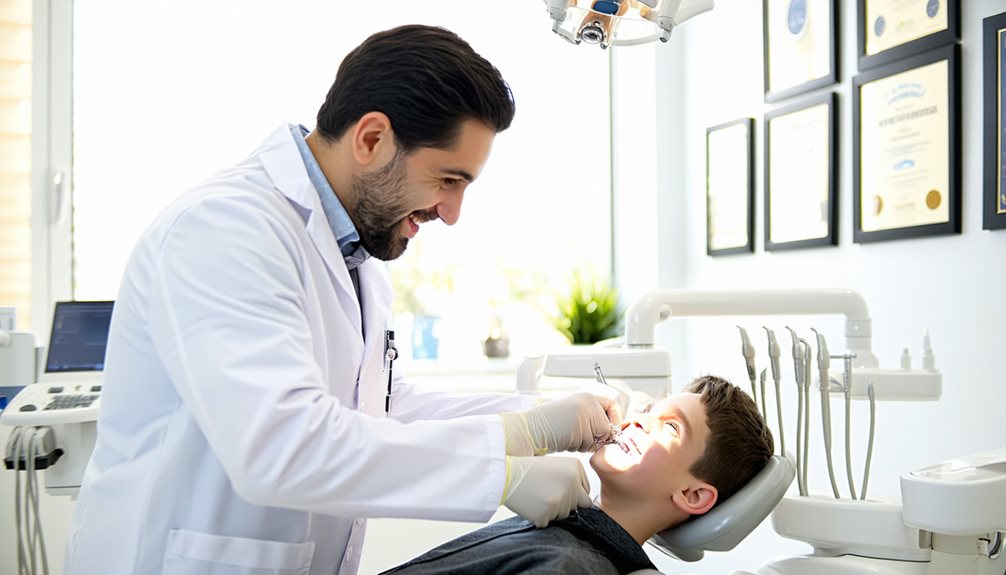
The best orthodontists for underbite correction blend technical expertise with cutting-edge technologies, providing tailored solutions for complex dental conditions. They employ thorough assessment techniques, including CBCT and 3D digital modeling, to precisely evaluate facial symmetry and jaw function. Customized treatment plans featuring clear aligners and functional appliances help address skeletal discrepancies, ensuring effective and discreet correction. Experienced teams provide multidisciplinary insights, continuously updating methodologies to enhance patient satisfaction and outcomes. The integration of digital monitoring systems allows for real-time progress tracking, empowering patients in their treatment journey. There is more about the tools and stories transforming underbite correction.
Comprehensive Assessment Techniques
In evaluating patients for underbite correction, orthodontists employ thorough evaluation techniques that integrate both clinical examination and advanced diagnostic tools.
Accurate patient evaluations begin with a detailed clinical examination, which includes analyzing facial symmetry, dental occlusion, and jaw function. Orthodontists meticulously measure dental casts to evaluate tooth alignment and bite relationships, which are vital in diagnosing the severity of an underbite.
Advanced diagnostic imaging technologies play an instrumental role in enhancing the precision of these evaluations. Techniques such as cone-beam computed tomography (CBCT) provide three-dimensional representations of craniofacial structures, allowing practitioners to visualize underlying skeletal discrepancies and evaluate airway dimensions.
Additionally, cephalometric analysis facilitates the appraisal of jaw position in relation to the skull, offering significant insights into the anatomical etiology of the malocclusion.
Patient evaluations are further augmented by digital intraoral scanning, which captures high-resolution images of dentition, ensuring accurate treatment planning.
These innovative diagnostic modalities not only enhance the orthodontist’s ability to deliver precise, individualized treatment plans but also empower patients by providing a thorough understanding of their condition.
Innovative Treatment Technologies
In the domain of underbite correction, innovative treatment technologies have transformed patient care through the introduction of advanced orthodontic devices and cutting-edge techniques.
These technologies, including 3D imaging and computer-aided design, facilitate precise customization of appliances such as clear aligners and mandibular advancement devices, ensuring ideal alignment and function.
Advanced Orthodontic Devices
Advancements in orthodontic technology have led to the development of innovative devices specifically designed for the correction of underbites, offering patients more effective and less invasive treatment options. Among these, clear aligners have gained prominence due to their ability to discreetly rectify dental misalignments.
These devices employ a series of custom-made, transparent trays that progressively shift teeth into the desired position. Their aesthetic appeal and comfort make them a preferred choice for patients seeking a subtle orthodontic solution.
Functional appliances, on the other hand, are revolutionary with regard to addressing the skeletal discrepancies associated with underbites. These devices are designed to modify jaw growth, fostering a harmonious relationship between the dental arches.
By harnessing the natural growth potential of younger patients, functional appliances can effectively minimize the need for surgical intervention in cases of severe underbites.
Both clear aligners and functional appliances represent the forefront of orthodontic innovation, providing orthodontists with a diverse array of tools to tailor treatment plans according to individual patient needs.
As these technologies continue to evolve, patients can expect even more personalized and efficient underbite correction solutions, aligning with the growing demand for advanced, patient-centric orthodontic care.
Cutting-Edge Treatment Techniques
Frequently, the field of orthodontics witnesses groundbreaking treatment techniques that aim to enhance patient outcomes and experience. One of the most revolutionary advancements is the integration of 3D imaging technology, which allows orthodontists to create precise digital models of a patient’s dentition.
These models facilitate accurate diagnosis and treatment planning, especially for complex cases like underbite correction. By simulating various treatment scenarios, orthodontists can tailor interventions that minimize discomfort and optimize results.
Another innovative approach is the use of virtual consultations. This technology provides patients with convenient access to specialist advice without the need for in-person visits, thereby reducing travel time and increasing accessibility.
During virtual consultations, orthodontists can review 3D imaging data, discuss treatment options, and monitor progress remotely, ensuring continuous care and timely adjustments.
Furthermore, clear aligners, custom-made using 3D printing technology, have become increasingly popular for their aesthetic appeal and effectiveness in treating underbites.
These aligners, designed based on 3D imaging, offer a discreet alternative to traditional braces, promoting better oral hygiene and patient compliance.
Customized Patient Care Plans
Customized patient care plans are essential in underbite correction, focusing on personalized treatment approaches that cater to the unique anatomical and functional needs of each patient.
These plans incorporate individual progress tracking to monitor treatment efficacy and make necessary adjustments, ensuring ideal outcomes.
Additionally, tailored support resources are provided to enhance patient education and engagement throughout the orthodontic journey.
Personalized Treatment Approaches
Crafting an effective treatment plan for underbite correction necessitates a thorough evaluation of each patient’s unique anatomical and physiological characteristics. This process begins with holistic evaluations that encompass a detailed assessment of dental structure, jaw alignment, and facial symmetry. Such evaluations are critical in identifying the root causes of the underbite, whether they be skeletal, dental, or a combination of both.
By employing advanced imaging techniques and diagnostic tools, orthodontists can obtain detailed insights into the intricate dynamics at play, enabling the development of adaptive strategies tailored to individual needs.
A personalized treatment approach integrates cutting-edge orthodontic techniques with patient-specific considerations, ensuring that the corrective measures align seamlessly with the patient’s lifestyle and expectations. Customized appliances, such as clear aligners or tailored braces, are meticulously designed to accommodate the unique contours of each patient’s oral cavity, thereby optimizing the efficacy of the treatment.
Additionally, personalized care plans may incorporate innovative technologies, such as 3D modeling and digital simulation, to predict outcomes and enhance decision-making. This patient-centered methodology not only addresses the immediate orthodontic concerns but also fosters long-term oral health and functional harmony, setting a new standard in contemporary orthodontic care.
Individual Progress Tracking
Accurate individual progress tracking is essential to the success of customized patient care plans in orthodontic treatment for underbite correction. This meticulous approach guarantees that each patient’s unique requirements are addressed effectively, promoting ideal treatment outcomes.
Progress monitoring involves regular assessments and adjustments of the treatment plan based on clinical evaluations and technological insights. Advanced imaging techniques, such as 3D scanning and digital modeling, facilitate precise measurements of dental and skeletal structures, enabling orthodontists to make informed decisions.
Patient engagement plays a significant role in progress tracking, as it fosters a collaborative environment where patients are active participants in their treatment journey. By leveraging digital platforms, orthodontists can enhance communication and provide real-time updates on treatment milestones.
Innovative tools, such as mobile applications and wearable devices, offer new avenues for individualized progress monitoring, allowing for seamless integration of data and personalized feedback.
As orthodontics continues to evolve, these technologies will be vital in refining patient care plans, ultimately leading to more efficient underbite correction and improved patient satisfaction.
Tailored Support Resources
Integrating individual progress tracking with tailored support resources enhances the effectiveness of orthodontic care plans for underbite correction. This innovative approach guarantees each patient receives a customized treatment plan that addresses their unique anatomical and physiological needs.
By leveraging advanced diagnostic tools and data analytics, orthodontists can develop precise, patient-specific interventions that optimize treatment outcomes.
Tailored support extends beyond generic treatment protocols, offering a thorough suite of resources that cater to the patient’s journey. These resources include personalized consultation sessions, digital monitoring systems, and adaptive orthodontic appliances designed specifically for the patient’s oral morphology.
Enhanced resource availability guarantees that patients have access to cutting-edge technologies and expert guidance throughout their treatment process.
The integration of tailored support resources into orthodontic care plans not only fosters improved clinical outcomes but also enhances patient satisfaction and engagement. When patients are active participants in their treatment, with access to information and tools that resonate with their personal circumstances, adherence to prescribed regimens improves greatly.
This patient-centered approach underscores the commitment of leading orthodontic practices to not only correct dental discrepancies but also to empower patients through innovative, supportive frameworks. In this way, tailored support represents a paradigm shift in modern orthodontic care for underbite correction.
Experienced Orthodontic Teams
An experienced orthodontic team is essential for the successful correction of an underbite, as they consistently bring a wealth of technical expertise and clinical knowledge to the treatment process. Such a team is adept at fostering seamless team collaboration, guaranteeing that each specialist contributes their unique skills to optimize patient outcomes.
This multidisciplinary approach is pivotal in developing thorough treatment plans that address the complexity of underbite correction, integrating innovative techniques and best practices.
Patient education is another cornerstone of an experienced orthodontic team. By providing patients with a clear understanding of their condition and the treatment options available, the team empowers individuals to make informed decisions about their orthodontic care.
This process not only enhances patient satisfaction but also promotes adherence to prescribed treatment regimens, ultimately leading to more successful outcomes.
Furthermore, experienced orthodontic teams are committed to continuous professional development, staying abreast of the latest advancements in orthodontics.
This commitment to innovation guarantees that patients receive cutting-edge treatment options tailored to their specific needs.
Advanced Diagnostic Tools
The cornerstone of effective underbite correction lies in the utilization of advanced diagnostic tools, such as digital imaging and 3D modeling, which provide orthodontists with unparalleled precision in treatment planning.
These technologies enable clinicians to visualize complex craniofacial structures in three dimensions, facilitating the assessment of dental and skeletal relationships that are essential for devising personalized treatment strategies.
Digital imaging offers high-resolution images, allowing for precise measurement and analysis of the jaw and teeth alignment, while 3D modeling creates an all-encompassing representation of the patient’s anatomy.
To further explore the significance of these tools, consider the following:
-
Enhanced Accuracy: Digital imaging and 3D modeling improve diagnostic accuracy, allowing for precise identification of structural anomalies and exact assessment of the underbite severity.
-
Predictive Modeling: By simulating potential treatment outcomes, 3D modeling enables orthodontists to predict the effectiveness of different interventions, optimizing treatment plans for better outcomes.
-
Patient Engagement: These tools empower patients by providing a visual understanding of their condition and planned treatment, fostering informed decision-making and patient compliance.
The integration of digital imaging and 3D modeling in orthodontics not only revolutionizes diagnostic capabilities but also enhances patient satisfaction by ensuring tailored, effective treatment interventions.
Patient Success Stories
Building upon the technological advancements in diagnostics, the real-world impact of these innovations is best illustrated through patient success stories. Patient testimonials highlight transformative treatment outcomes, showcasing how cutting-edge orthodontic techniques have redefined the journey of underbite correction.
Through a precise interplay of digital imaging and bespoke treatment protocols, patients have experienced profound aesthetic and functional improvements.
A notable case involved a 25-year-old patient presenting with a severe underbite, which was corrected through a combination of orthodontic and orthognathic interventions. Advanced 3D imaging facilitated accurate planning and simulation, allowing for a minimally invasive surgical approach.
The treatment outcome was not only a harmonized bite but also an enhanced facial symmetry, leading to heightened patient satisfaction and improved quality of life.
Another testimonial from a teenage patient emphasized the role of clear aligner technology in discreetly addressing their underbite. This non-invasive approach, guided by sophisticated software algorithms, provided a predictable timeline and outcome.
The patient’s enhanced self-esteem and oral functionality underscore the pivotal role of innovation in orthodontics.
These success stories affirm the critical importance of leveraging advanced diagnostics and personalized treatment plans in achieving superior patient outcomes, underscoring the transformative potential of modern orthodontic care.
Frequently Asked Questions
How Long Does Underbite Correction Typically Take?
The underbite duration varies, with a treatment timeline typically spanning 12 to 36 months. Factors influencing this include severity, patient age, and chosen orthodontic techniques, reflecting advancements in innovative clinical interventions tailored to each patient’s unique needs.
Are There Any Dietary Restrictions During Treatment?
During orthodontic treatment, patients may experience temporary dietary restrictions, primarily emphasizing soft foods to minimize discomfort and facilitate healing. Innovative chewing techniques can be adopted to guarantee adequate nutrition while preventing exacerbation of orthodontic adjustments.
What Are the Costs Involved in Underbite Correction?
The costs involved in underbite correction can vary considerably based on treatment type and complexity. Treatment financing options and insurance coverage should be explored to alleviate financial burdens, ensuring innovative, patient-focused solutions tailored to individual clinical needs.
Can Underbite Correction Be Done in Adults?
Underbite correction in adults is feasible, utilizing advanced orthodontic options such as braces, clear aligners, and surgical interventions. Adult treatment can effectively address bite discrepancies, promoting functional improvement and aesthetic enhancement tailored to individual patient needs and innovative solutions.
What Are the Risks Associated With Underbite Correction Procedures?
Underbite correction procedures entail potential surgical complications such as infection, nerve injury, and anesthesia reactions. Recovery time varies, influenced by individual healing processes. Emphasizing innovative techniques and patient-focused care can mitigate risks and enhance outcomes.
Conclusion
To summarize, the correction of underbites necessitates a multifaceted approach integrating thorough assessment techniques, innovative treatment technologies, and customized patient care plans. The involvement of experienced orthodontic teams, utilizing advanced diagnostic tools, enhances the precision and efficacy of treatment outcomes. Documented patient success stories further substantiate the effectiveness of these methodologies. The amalgamation of technical expertise and clinical application fosters improved patient satisfaction and contributes to the advancement of orthodontic practice in underbite correction.

